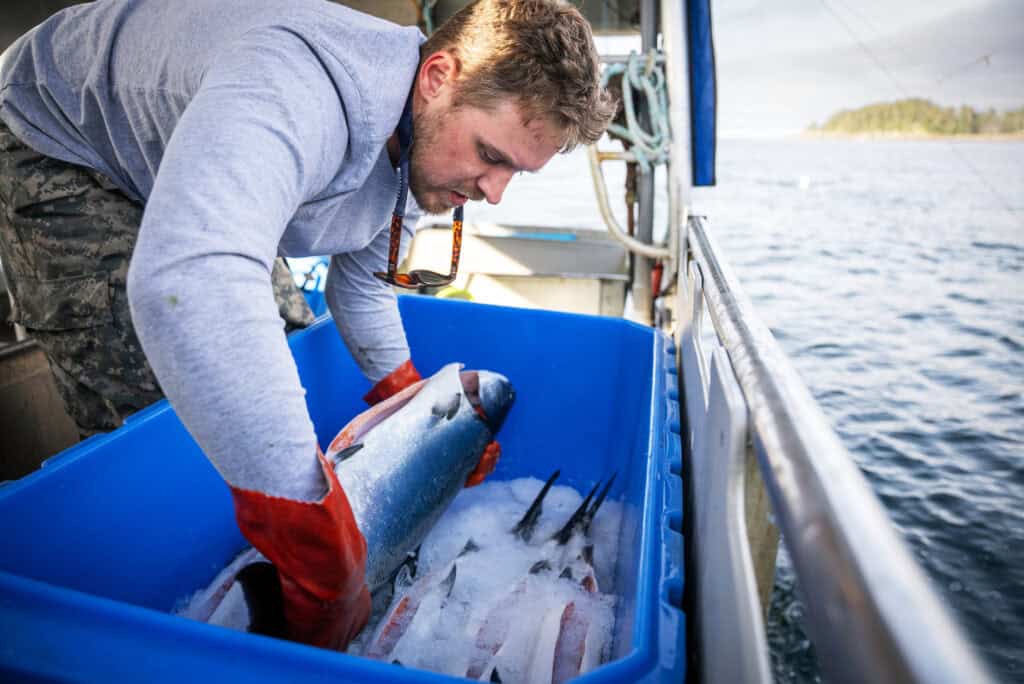
A fishing vessel with a net of salmons pilling onto the dock.

Seafood & Mariculture

Goal: Create jobs and wealth by advocating for a well-managed, sustainable and resilient seafood sector, and develop higher-value ocean products that reach more markets.

Industry Overview

The seafood industry is a key economic driver in the region and historically has been the top employer in the region, but in recent years the industry has fallen from that top spot due to challenges in the industry and historically low fish prices.

However the industry is still responsible for over 3,000 annualized jobs and over $200 million in wages and generates over a billion dollars in economic impact.  The five species of salmon are over half the pounds landed in the region, with blackcod, halibut, crab, and the dive fisheries also playing an important role. Mariculture is a growing industry across the region with numerous oyster and kelp farms now in operation. A strong seafood, mariculture and maritime sector will be vital to economic prosperity in Southeast Alaska. 

Key areas of focus are continuing to support the development of a robust mariculture sector through the Alaska Mariculture Cluster, foster collaboration and the creation of new partnerships across the region, encouraging modernization that helps reduce costs and create more value, and further developing Alaska seafood markets including regional specific marketing. 

Read more about Southeast Conference key seafood and mariculture objectives, programs, projects and partnerships below.

Seafood & Mariculture
On this page:

Quick links loading…

Committee Chair: Mark Scheer

Seafood & Mariculture Objectives

Our strategic goals across Southeast Alaska’s major industries are outlined in our Comprehensive Economic Development Strategy report.  This document presents specific Objectives to support the economic growth and sustainability of our region, with some “Priority Objectives” identified as having the greatest urgency or beneficial impact.

The Objectives identified for Seafood & Mariculture are:

Support marketing efforts to expand existing and develop new domestic and international markets for Alaska seafood. Additionally, encourage efforts to develop new products and increase utilization, promote the origin and sustainability of Alaska seafood, guide research opportunities, and advance seafood friendly policies.
The Seafood Modernization Initiative, led by the Alaska Fisheries Development Foundation (AFDF), provides a comprehensive framework to revitalize the industry, support economic well-being in coastal communities, and ensure longterm sustainability for Alaska's fisheries.
Work to expand upon existing economic activity of the summer salmon harvesting season to insulate local economies by supporting additional processing and direct marketing opportunities. Support the processing of products throughout the year, including value-added products, to help establish a year-round seafood workforce and create more economic activity in between fishing seasons. Consider economic incentives for seafood processors and direct marketers to develop value-added seafood products that are produced within the region, rather than shipping out products for reprocessing. Encourage increased participation in mariculture activities and lower volume fisheries in shoulder seasons to increase year-round economic activity, including small and medium processors more likely to undertake these activities. Explore and support ways to diversify and overlap the ocean-based, product-type businesses, so they complement each other and build alignment between opportunities the fleet wishes to pursue and processing operations.
Increase total revenue from existing commercial fisheries in the region by developing new, higher-value products and markets from low-value products and seafood waste. Work with seafood processors to develop new products and identify businesses or entrepreneurs not currently in the seafood industry who can contribute to this effort. Collaborate with private, state, federal, and university researchers to encourage, identify, and accelerate opportunities for commercialization of improved or new products. Support development of new specialty products that utilize 100% of harvested seafood resources to create value-added products with the same resource and provide additional economic benefits to local economies, particularly for seafood dependent communities.
Accelerate the development of a viable and sustainable mariculture industry, producing shellfish and seaweed for the long-term benefit of Alaska’s economy, environment, and communities. Leverage existing resources and partnerships to build a sustainable, robust industry with a goal of sustainable economic development that creates jobs and household incomes. Maximize existing resources and partnerships including the Alaska Mariculture Cluster’s (AMC) Build Back Better Regional Challenge (BBBRC) to overcome barriers to development and achieve scale. Increase the number of mariculture operations, providing financial and technical support for mariculture entrepreneurs. Continue to build the Alaskan brand of mariculture products by marketing their superior quality, sustainable practices and positive impact. Support increased hatchery capacity and seed production and quality, including stability for operations, technical knowledge transfers, and workforce development. Leverage existing seafood processing capital, including bringing additional seaweed and oyster processing capacity to the region. Work with mariculture farmers to develop frozen oyster products and markets. Support development of regional and sub-regional multi-use facilities for processing, storing, aggregation and shipment. Support research, community engagement, and education for mariculture in the region.
Many of Southeast Alaska’s small rural communities have been seafood economies for hundreds if not thousands of years and have a heavily reliance on the seafood sector. However today many of these communities are also experiencing a loss of seafood jobs with the outmigration of permits, loss of processing capacity, and a decrease in high-paying crew jobs. Many members of small indigenous communities are unable to participate in commercial fisheries today because of lack of ownership of permits and quota required and the high cost of entry necessary to purchase permits, a vessel, and equipment. The high cost of entry is a significant limiting factor for local participation, especially in communities where there are already limited economic opportunities to generate cash. Industry stakeholders will work collaboratively to find ways to bring seafood economies of scale back to the region’s smallest communities through exploring opportunities to increase participation in fisheries, supporting processing and buying operations in small communities, providing educational services to help build seafood businesses, and assessing potential policy changes. Foster collaboration between stakeholders to find creative solutions to logistical challenges. Increasing seafood jobs within small communities builds resiliency and can help support subsistence opportunities.
Advocate for changes to the State’s fisheries revolving loan fund to make the process more streamlined and more functional. Also increase loan guarantees and low interest loan options for processors. Make USDA programs (including loans) available to fishermen and seafood processors so that the seafood industry receives comparable assistance to the agriculture and farming industry. Collaborate with the Federal delegation and state representatives to secure increased funding for programs that support Alaska fishermen and processors, including grants or other incentives for infrastructure improvements, workforce development, marketing, nutrition programs, and other necessary business operations. Advocate for expanded federal support that addresses the specific challenges and opportunities facing Alaska seafood harvesters and processors. Expand use and allocations of the SK funds for use as originally designed for and seafood tax credits to allow for use on additional types of equipment and improvements.
Protect commercial fisheries by advocating for stable regulatory and management regimes. Support research and data collection by state and federal agencies and other research institutions to ensure policies and management decisions are based on the best available science and decrease uncertainty surrounding the industry. Help foster collaborative efforts between regulators, the seafood industry, universities, and other stakeholders. Educate policy makers and regulators to employ responsible and sustainable harvest decisions for Alaska seafood and other ocean products. Leverage long-term investment through a predictable regulatory structure and enhanced knowledge on the processes of Alaska fisheries management.