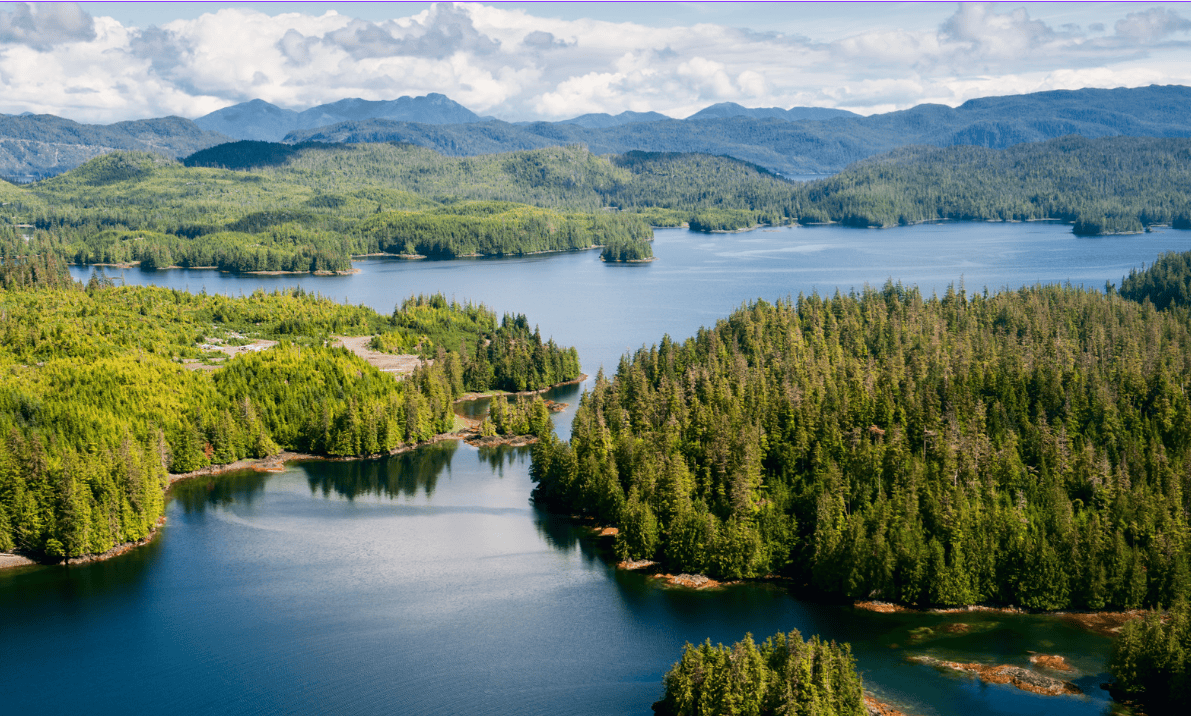
A series of islands in a bay before a larger, mountainous land mass.

Natural Resources

Goal: Support responsible development in Southeast Alaska.

Industry Overview

Southeast Conference’s Natural Resources Program advances practical, community-driven projects that support sustainable forest management, energy resilience, and economic development across Southeast Alaska.

The program is focused on implementation by aligning partners, securing funding, and delivering projects on the ground.

Focus Areas

  • Biomass Energy
    Local wood-to-energy systems, including pellets, chips, and community heating.
  • Forest Products
    Support for young-growth utilization and value-added processing.
  • Workforce Development
    Training tied directly to biomass, forestry, and wood products projects.
  • Regional Coordination
    Aligning partners to advance projects efficiently across the region.

Approach

  • Implementation-focused.
  • Regionally coordinated.
  • Leverages funding and partnerships.
  • Builds local capacity.

Get Involved

SEC works with businesses, municipal and Tribal governments, industry, and agencies to move projects forward across Southeast Alaska.

Natural Resources
On this page:

Quick links loading…

Natural Resources Objectives

Our strategic goals across Southeast Alaska’s major industries are outlined in our Comprehensive Economic Development Strategy report.  This document presents specific Objectives to support the economic growth and sustainability of our region, with some “Priority Objectives” identified as having the greatest urgency or beneficial impact.

The Objectives identified for Natural Resources are:

Two populations of Chinook salmon are currently listed as endangered, and seven are listed as threatened under the Endangered Species Act. While none of these populations are located in Alaska or Southeast, the listing of Chinook salmon in Southeast Alaska could have enormous regulatory and industry impacts across the natural resource sectors. While the decline of salmon populations appears to be related to changes in ocean temperature and food supply, and are not habitat related, the use of habitat areas could be heavily regulated should such a listing occur, with substantial permitting process changes. Prepare in advance for these potential changes to reduce the impact on regional industries.
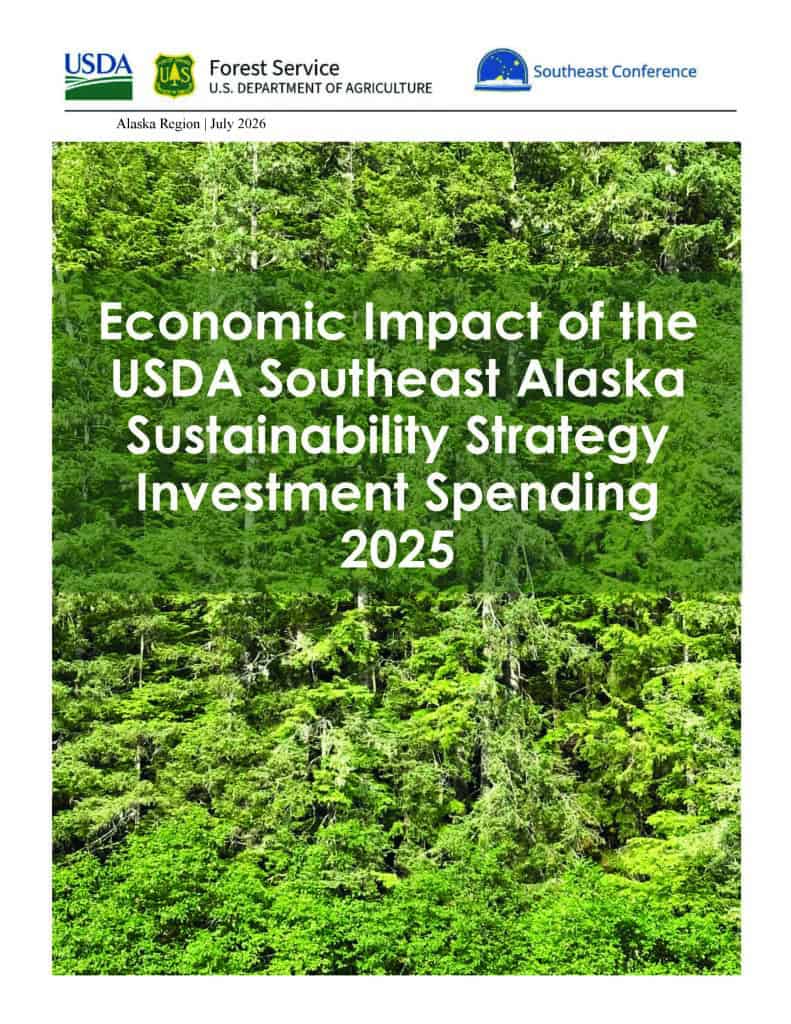
The Forest Service commits spending each year to contracts in support of construction, maintenance and land management. Help direct these contracts to local firms. Advocate for right-sizing larger projects into several smaller or linked phases. Revise federal financial bonding requirements on contracts. Provide a variety of large and small contract opportunities. Extend harvest schedules, allow harvest of dead/down trees on road corridors, and reduce bonding requirements.
Address the USFS transition plan that expects harvest to be predominantly young growth by 2040 to 2070. Work to integrate and diversify the timber industry rather than developing an industry extinguishment and replacement strategy. Explore and lean into technology innovation to make operations more efficient, create new opportunities and leverage success. Develop new and boutique markets for AK forest products, including consideration of the demand for old growth products. Create collaborative opportunities and shared costs to reduce operating costs for small and new ventures. Ensure timber sales are economically viable. Provide a cushion of purchased but unharvested timber. Allow economic old growth timber to be harvested in a volume sufficient to meet market demand for an integrated timber industry.
Highlight Alaska, and particularly Southeast, projects as stable and attractive investments to support a balanced investment portfolio. Attract investors from inside and outside Alaska and uncover regional funding as an opportunity to maintain Southeast projects with Southeast capital as an overall economic growth strategy. Maintain an economicallycompetitive environment in the face of the increasing cost of supplies, labor, taxes, road maintenance, operations, and supply costs. Create a broad statement telling the Alaska and Southeast story as reliable and safe investments opportunity for both mineral and timber. Invest and incentivize Southeast businesses providing services to existing exploration projects and operations to foster competitiveness with global markets and brands.
Support management, research, and legal efforts to assure access to adequate, consistent, and economic three-year timber supply on federal and state forest lands. To be economically successful, local mills must be provided an opportunity to accumulate a supply of purchased but unharvested economic timber (i.e. volume under contract) equal to approximately three years of timber consumption. This allows the industry time to: 1) plan orderly and systematic harvest schedules that meet timing restrictions and permit requirements; 2) better manage its financial resources and to secure financing on the basis of longer-term timber supply; 3) allow time for infrastructure maintenance; and 4) give the industry more opportunity to sustain itself through erratic market cycles.
In order for the region’s natural resource sector to be successful, the government workers regulating these industries must be provided with the tools they need to act quickly and judiciously. Ensure the departments that oversee regulations are properly funded and staffed. Support the educational institutions that train regulators to ensure they are of the highest quality. Ensure that mutual sharing of information happens expeditiously so that successful permitting decisions can be arrived at quickly. Support the regulatory process and the people responsible for overseeing the process.
Ensure that federal lands in Southeast Alaska are developable and accessible. Support road access for the mining industry and hydroelectricity in the Tongass. Energy and road access are two of the major obstacles to mining development. Mining companies often need road access to get heavy equipment from tidewater to a project site or for exploring and developing a mine or a hydro facility. Road access for mining exploration and development and for renewable energy projects has been particularly difficult to obtain in Inventoried Roadless Areas (IRAs).
Support the development of an updated management plan for the Tongass that is realistically responsive to industry needs and assists with developing a stable, economically-viable timber sale program that produces sufficient, predictable timber volume to meet market demand three years in advance. Update standards, allowances and guides to reflect modern and full utilization of the forest for more environmentally- friendly and sustainable harvest practices. Revisit Land Use Designations, and updated fall-down calculations. Support efforts to get land back into State ownership that are owed to the State. Develop a reasonable schedule to conduct young growth harvests that are economically viable. Address market development and market fluctuations, including identifying markets for young growth. Develop 10-year plan.